
News and Opinions
Governance Training in Limpopo
By Feryal Domingo
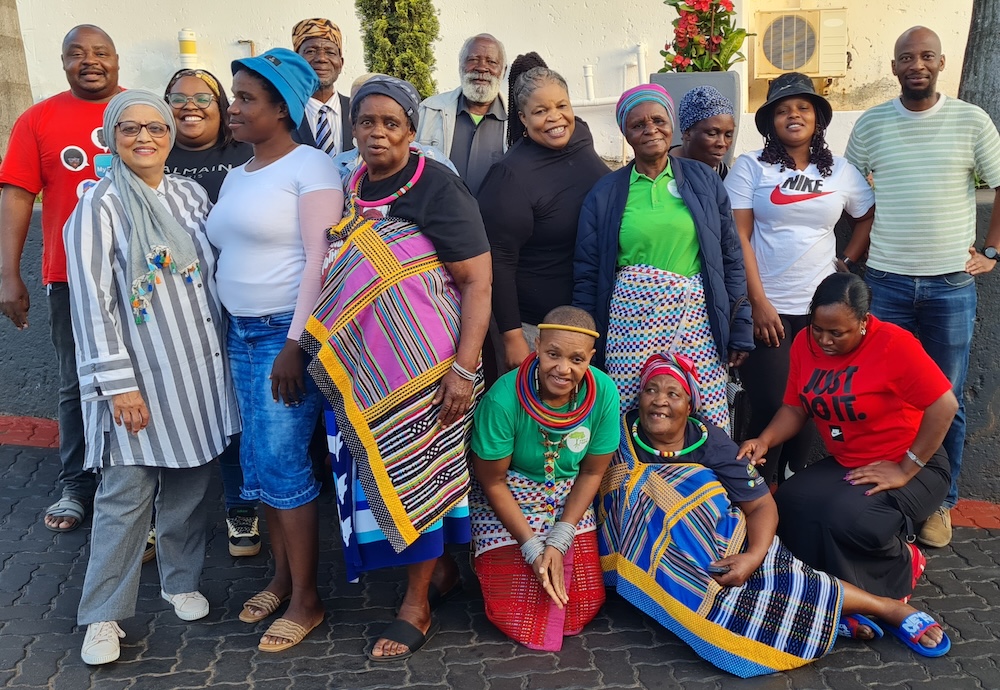
These organisations are doing vital work on the ground—protecting sacred natural sites, preserving indigenous knowledge, and leading grassroots ecological activism. But as any non-profit leader knows, passionate activism needs to be backed by robust institutional structures to survive and thrive long-term. That is exactly what we spent two days unpacking, using Inyathelo’s Advancement Framework.
Here is how our story unfolded over the two days, and the key highlights of what we achieved together:
- We began with a critical conversation about the board's composition. We discussed how a board cannot just be a collection of names; it must intentionally map and cultivate the specific skills needed to steer and navigate the organisation's strategic plan.
- For an organisation like Dzomo La Mupo, which is women-led and deeply embedded in traditional communities, a beautiful highlight was exploring how to bridge traditional community influence with formal institutional stewardship. We looked at moving from "verbal trust" to documented accountability - like formal minutes and resolutions - to protect their hard-earned grantee status.
- For Rothoma Mudimeli, whose focus is grassroots waste management and community mobilisation, scaling up means ensuring the internal machinery runs smoothly. We spent time distinguishing between the governance oversight of the Board and the daily operational responsibilities of management, specifically clarifying the critical relationship between the Chairperson and the Executive Director.
- Over the two days, we took the fear out of compliance. We dived deep into the core legal responsibilities of non-profit boards, breaking down financial accountability, the foundational Duty of Obedience, and practical ways to apply the Independent Code of Governance alongside the principles of King IV and King V.
- We also tackled the very real regulatory hurdles facing South African NPOs today, demystifying complex compliance frameworks like the new Beneficial Ownership requirements so both organisations can protect their operational space.
- We wrapped up our time together with an interactive SWOT analysis. It was a practical way for both teams to align their day-to-day work with their long-term resilience and ecological missions.
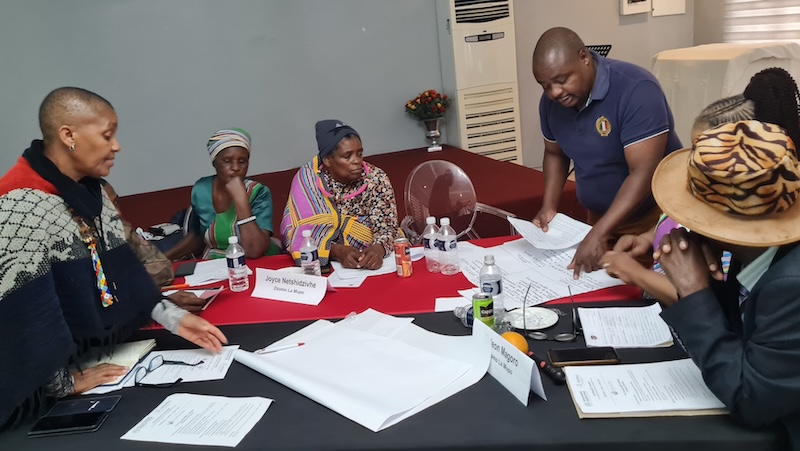
What made this intervention so special was that both board members and key staff members sat in the room together.
For Dzomo La Mupo and Rothoma Mudimeli, the true value of these two days lay in building a shared vision. Staff gained incredible insight into strategic decision-making, while board members heard firsthand perspectives from the ground level.
They left the room not just with resources or writing in notebooks, but with a unified understanding of how professional governance and institutional stewardship protect their vision. When grassroots leadership is backed by solid governance, these organisations become unstoppable in advancing their missions.
A huge thank you to the team at Environmental Justice Fund for partnering with us, and to the dedicated leaders of Dzomo La Mupo and Rothoma Mudimeli in Limpopo for their trust, energy, and deep commitment to ethical governance!
The following closing remarks were made by Dr Magoro Madzuhe Itani Gideon, the deputy-Chairperson of Dzomo La Mupo:
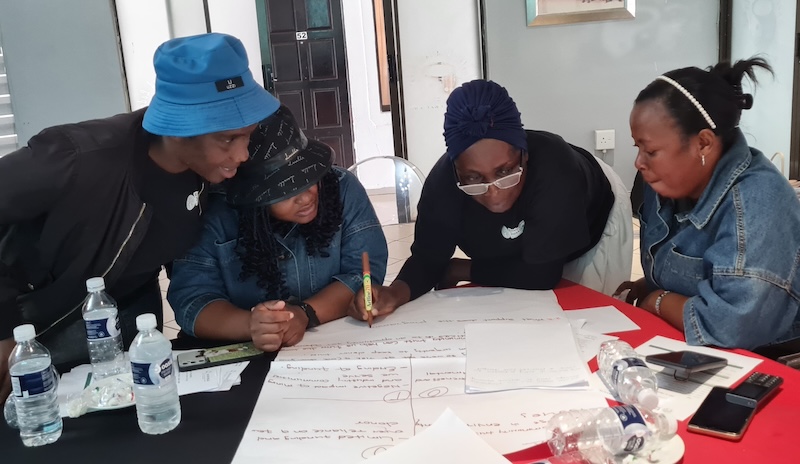 “We have just concluded an intensive and vital session, and I am tasked with the honour of thanking those who have made this learning possible. When we speak of leadership control and fiduciary duty, we are talking about the soul of our organization. As custodians of our environment and our culture, we cannot afford to be stewards who are not compliant, transparent, and accountable.
Today's training on the King IV Code and the Independent Code of Governance has brought to life what it truly means to hold power in trust.
To Ms. Feryal Domingo and Ms. Soraya Joonas: Thank you. You have not just lectured us on compliance, you have empowered us. You have shown us that strategy and values are not just words in a report, but the guiding principles of our decisions.
Understanding our Fiduciary Duties and mapping our Beneficial Ownership ensures that Dzomo La Mupo stands robust, not only against environmental threats but also against internal mismanagement.
The Environmental Justice Fund has given us resources, but you, our facilitators, have given us the tools to manage those resources with integrity.
We are walking away with a clearer understanding of how to govern our organisation with a tight hand on compliance and a free heart for our environmental justice mission. Therefore, on behalf of the Board and Staff of Dzomo La Mupo, I extend our deepest gratitude to Feryal Domingo and Soraya Joonas for your expert guidance, patience, and for simplifying complex governance matters into actionable strategies.”